Understanding the Needs of Broilers: Environmental Control
เจาะลึกความต้องการไก่เนื้อ: การควบคุมสภาพแวดล้อม

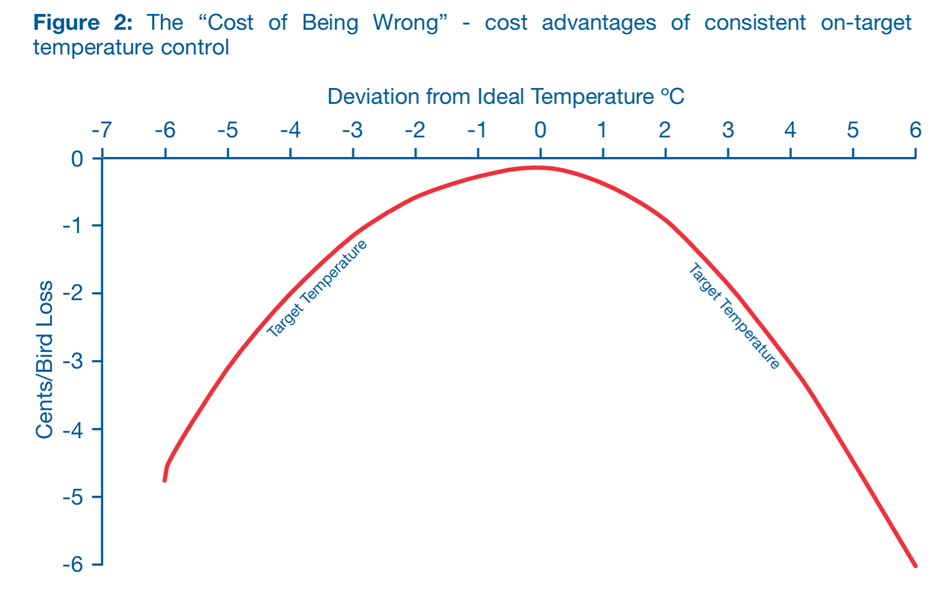
Effective environmental management in a broiler house creates conditions that allow birds to perform efficiently, remain healthy, and ensure good welfare. Even small improvements in temperature control can translate into meaningful gains across an entire flock.
การจัดการสภาพแวดล้อมที่มีประสิทธิภาพในโรงเรือนไก่เนื้อช่วยสร้างสภาวะที่เอื้อให้ไก่สามารถแสดงสมรรถภาพการผลิตออกมาได้อย่างเต็มที่ มีสุขภาพและมีสวัสดิภาพที่ดี แม้แต่การปรับปรุงการควบคุมอุณหภูมิเพียงเล็กน้อยก็สามารถส่งผลดีต่อผลผลิตของฝูงไก่ได้อย่างมหาศาล
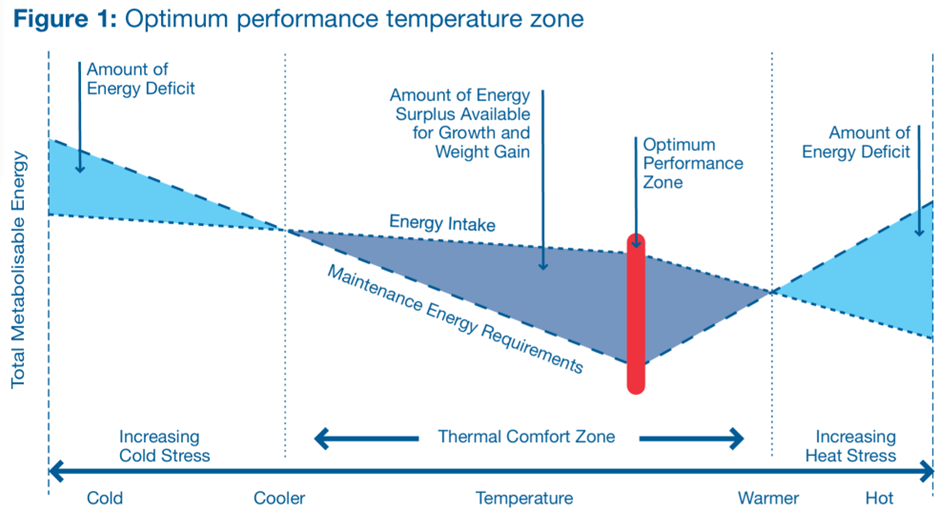
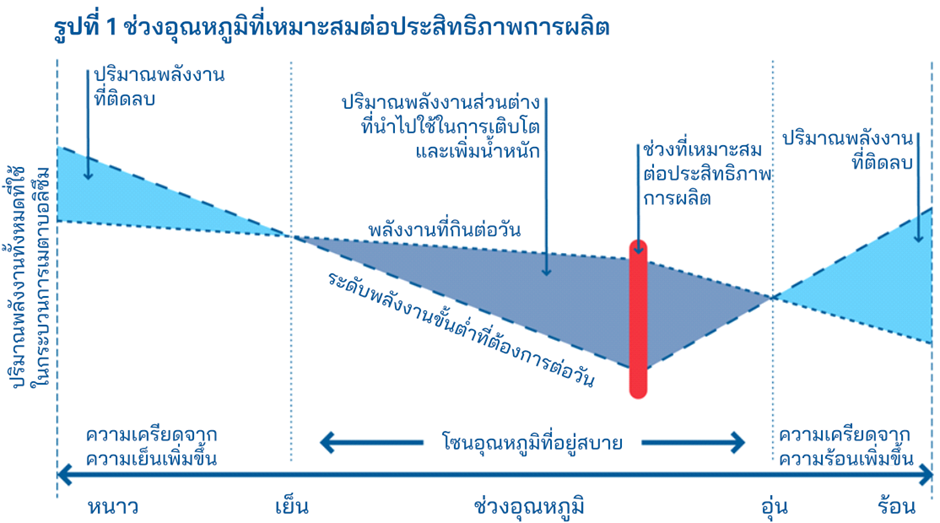
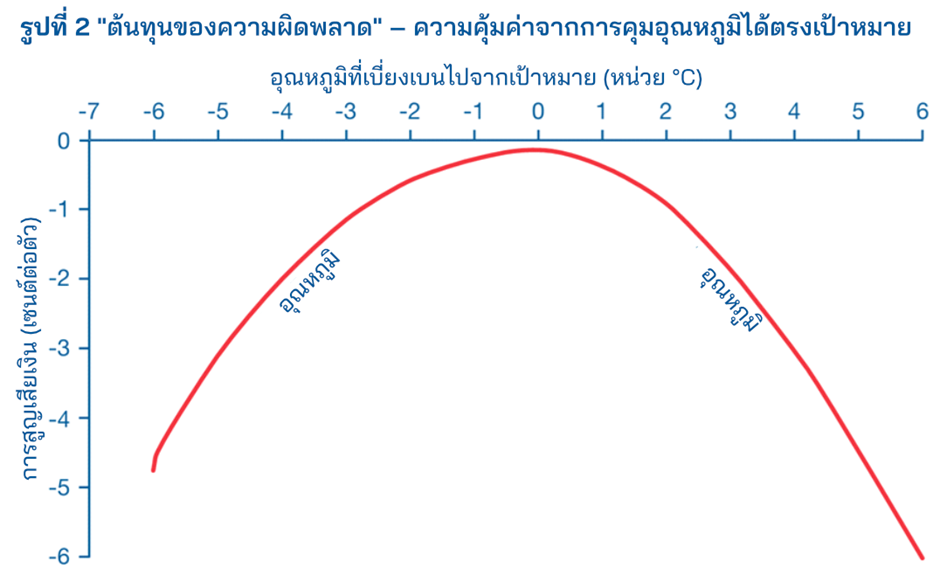
At every stage of growth, broilers have a comfort zone — a narrow temperature range in which they make the best use of feed for growth. This “thermoneutral zone” changes as birds grow (from around 30°C at placement to near 20°C at depletion), so ventilation and heating must be continuously adjusted throughout the cycle to meet the birds’ needs. Below the comfort zone, feed intake may increase, but the additional nutrients are used to keep warm rather than grow, reducing efficiency. Above the comfort zone, birds typically reduce feed intake to limit heat production and pant to dissipate excess heat, thereby reducing growth.
ไก่เนื้อจะมี “โซนอยู่สบาย” (Comfort zone) ในทุกช่วงการเจริญเติบโต ซึ่งเป็นช่วงอุณหภูมิที่แคบมากที่ไก่จะสามารถใช้ประโยชน์จากอาหารเพื่อการเติบโตได้ดีที่สุด “ช่วงอุณหภูมิที่เหมาะสม” (Thermoneutral zone) นี้จะเปลี่ยนแปลงไปตามอายุของไก่ (ตั้งแต่ประมาณ 30°C ในช่วงเริ่มลงเลี้ยง จนถึงเกือบ 20°C ในช่วงปลด) ดังนั้น ระบบระบายอากาศและการทำความร้อนจึงต้องมีการปรับเปลี่ยนอย่างต่อเนื่องตลอดวงจรการเลี้ยงเพื่อให้ตอบโจทย์ความต้องการของตัวไก่ หากอุณหภูมิต่ำกว่าโซนอยู่สบาย ปริมาณการกินอาหารอาจเพิ่มขึ้น แต่สารอาหารที่เพิ่มมานั้นจะถูกนำไปใช้เพื่อรักษาความอบอุ่นแทนที่จะใช้ในการเจริญเติบโต ส่งผลให้ประสิทธิภาพการผลิตลดลง ในทางกลับกัน หากอุณหภูมิสูงกว่าโซนอยู่สบาย โดยปกติไก่จะลดการกินอาหารเพื่อจำกัดการสร้างความร้อนในร่างกาย และจะใช้วิธีหอบเพื่อระบายความร้อนส่วนเกินออกไป ซึ่งทำให้อัตราการเจริญเติบโตลดลงตามไปด้วย
The ability to heat a house is essential during early life, but ventilation is the most important tool for environmental control throughout the grow-out period. Even in cold weather, ventilation is needed to manage air quality and moisture — not just temperature. The environment must be uniform throughout the house. Drafts, hot spots, or areas of stale air can harm performance and increase losses.
ความสามารถในการทำความร้อนในโรงเรือนเป็นสิ่งจำเป็นอย่างยิ่งในช่วงแรกของชีวิตไก่ แต่ระบบระบายอากาศคือเครื่องมือที่สำคัญที่สุดในการควบคุมสิ่งแวดล้อมตลอดระยะเวลาการเลี้ยง แม้ในสภาพอากาศหนาวเย็น ระบบระบายอากาศก็ยังจำเป็นสำหรับการจัดการคุณภาพอากาศและความชื้น ไม่ใช่แค่เรื่องอุณหภูมิเพียงอย่างเดียว นอกจากนี้ สภาพแวดล้อมภายในโรงเรือนต้องมีความสม่ำเสมอทั่วทั้งหลัง ปัญหากระแสลมโกรก จุดที่มีความร้อนสะสม หรือจุดที่อับอากาศล้วนส่งผลเสียต่อประสิทธิภาพการผลิตและเพิ่มความสูญเสียได้
Broilers: Biological heaters
ไก่เนื้อ: แหล่งกำเนิดความร้อนที่มีชีวิต
Birds convert the feed and water they consume into energy to maintain their bodies and grow. During this process, metabolic heat and moisture are produced that must be dissipated to the environment. During the first days, supplemental heat will be needed to keep chicks warm, but as birds grow, their own body heat becomes a major source of environmental heat load. The bigger the birds get, the more heat and moisture they release into the house. For example, a flock of 20,000 birds, each around 1.8 kg, can produce as much heat as two or three large heaters running continuously.
ไก่จะเปลี่ยนอาหารและน้ำที่กินเข้าไปเป็นพลังงานเพื่อการดำรงชีพและการเจริญเติบโต ในระหว่างกระบวนการนี้จะเกิดความร้อนจากกระบวนการเมตาบอลิซึมและความชื้นซึ่งต้องได้รับการระบายออกสู่สิ่งแวดล้อม ในช่วงวันแรก ๆ ของการเลี้ยง จำเป็นต้องมีการให้ความร้อนเสริมเพื่อให้ลูกไก่อบอุ่น แต่เมื่อไก่โตขึ้น ความร้อนจากร่างกายไก่เองจะกลายเป็นแหล่งภาระความร้อนหลักในโรงเรือน ยิ่งไก่ตัวใหญ่ขึ้นเท่าไหร่ พวกมันก็จะระบายความร้อนและความชื้นเข้าสู่โรงเรือนมากขึ้นเท่านั้น ยกตัวอย่างเช่น ไก่ฝูงหนึ่งจำนวน 20,000 ตัว ที่น้ำหนักเฉลี่ยประมาณ 1.8 กิโลกรัม สามารถสร้างความร้อนได้มากพอ ๆ กับฮีตเตอร์ขนาดใหญ่ 2 หรือ 3 เครื่องที่ทำงานต่อเนื่องกันเลยทีเดียว
Birds consume significantly more water than feed, and much of this water is returned to the environment through droppings and respiration. During hot conditions, water intake increases further due to respiratory cooling (panting). This added moisture must be removed through effective ventilation; otherwise, litter quality will deteriorate, and house conditions will decline.
นอกจากนี้ ไก่ยังกินน้ำในปริมาณที่มากกว่าอาหารอย่างชัดเจน และน้ำส่วนใหญ่นี้จะถูกระบายกลับสู่สิ่งแวดล้อมผ่านทางมูลและการหายใจ ปริมาณการกินน้ำจะเพิ่มสูงขึ้นในสภาพอากาศร้อน เนื่องจากการระบายความร้อนด้วยการหายใจ (การหอบ) ความชื้นที่เพิ่มขึ้นนี้ต้องถูกกำจัดออกผ่านระบบระบายอากาศที่มีประสิทธิภาพ มิฉะนั้น คุณภาพของวัสดุรองพื้นจะเสื่อมโทรมลง และสภาพโดยรวมภายในโรงเรือนจะแย่ลงตามไปด้วย
Heat, humidity, and wind speed
ความร้อน ความชื้น และความเร็วลม
Relative humidity (RH) describes how saturated the air is with water vapor. Warm air can hold much more moisture than cold air. This is why ventilation in cool seasons can still dry out litter — cooler outside air warms up inside the house, lowering its relative humidity and allowing it to absorb more moisture from the litter. Temperature and RH together determine the effective temperature the bird experiences. For each 5% RH above 70%, the bird will feel approximately 1°C warmer; lower RH reduces the effective temperature.
ความชื้นสัมพัทธ์ คือค่าที่บอกว่าอากาศอิ่มตัวด้วยไอน้ำมากน้อยเพียงใด อากาศที่อุ่นจะสามารถอุ้มความชื้นได้มากกว่าอากาศที่เย็น นี่คือเหตุผลว่าทำไมการระบายอากาศในฤดูหนาวจึงยังสามารถช่วยให้วัสดุรองพื้นแห้งได้ เพราะอากาศข้างนอกที่เย็นกว่าเมื่อเข้ามาข้างในโรงเรือนจะถูกทำให้อุ่นขึ้น ทำให้ค่าความชื้นสัมพัทธ์ลดลงและสามารถดูดซับความชื้นจากวัสดุรองพื้นได้มากขึ้น อุณหภูมิและความชื้นสัมพัทธ์ (RH) เมื่อรวมกันจะเป็นตัวกำหนด “อุณหภูมิที่ไก่รู้สึกจริง” (Effective temperature) โดยทุก ๆ 5% ของค่า RH ที่สูงเกินกว่า 70% ไก่จะรู้สึกร้อนขึ้นประมาณ 1 องศาเซลเซียส ในทางกลับกันค่า RH ที่ต่ำลงจะช่วยลดอุณหภูมิที่ไก่รู้สึกจริงลงได้
Chickens lose most of their excess body heat directly to the surrounding air (radiation) or by air moving over their bodies carrying heat away (convection). When birds feel hot, they may lift their wings to expose more surface area to the air. If heat continues to build, they begin panting to cool themselves by vaporizing moisture from their airways (evaporation).
ไก่จะระบายความร้อนส่วนเกินออกจากร่างกายโดยตรงสู่สภาพแวดล้อมผ่านการแผ่รังสี (Radiation) หรือผ่านการที่อากาศเคลื่อนที่ผ่านตัวเพื่อพาความร้อนออกไป (การพาความร้อน – Convection) เมื่อไก่เริ่มรู้สึกร้อน พวกมันอาจกางปีกออกเพื่อเพิ่มพื้นที่ผิวสัมผัสอากาศให้มากขึ้น และหากความร้อนยังคงสะสมต่อเนื่อง ไก่จะเริ่มหอบ (Panting) เพื่อทำความเย็นให้ตัวเองผ่านการระเหยความชื้นออกจากทางเดินหายใจ (การระเหย – Evaporation)
For fully feathered birds, there must be a clear difference between environmental temperature and their body temperature (around 37.8°C) for effective heat loss. As house temperature rises above about 27°C, birds struggle to shed heat efficiently. If conditions are not corrected, feed intake drops, growth slows, and in extreme cases, birds suffer from heat stress.
สำหรับไก่ที่มีขนขึ้นเต็มตัวแล้ว จำเป็นต้องมีความแตกต่างที่ชัดเจนระหว่างอุณหภูมิสิ่งแวดล้อมและอุณหภูมิร่างกายของไก่ (ซึ่งอยู่ที่ประมาณ 37.8°C) เพื่อให้การระบายความร้อนมีประสิทธิภาพ เมื่ออุณหภูมิโรงเรือนสูงเกินกว่า 27°C ไก่จะเริ่มประสบปัญหาในการระบายความร้อน หากสภาวะนี้ไม่ได้รับการแก้ไข ปริมาณการกินอาหารจะลดลง การเติบโตช้าลง และในกรณีที่รุนแรง ไก่จะเกิด ความเครียดจากความร้อน (Heat stress)
Ventilation helps replace warm indoor air with cooler outside air. Moving air over birds (wind-chill effect) can make them feel cooler than the actual air temperature. Tunnel ventilation is especially good at this. Some houses are equipped with evaporative cooling systems, such as foggers or cool cells. These systems remove heat from the air by changing water to vapor and absorbing the vapor into the air. This works best in areas with low environmental RH% and will, in turn, increase the RH% within the house. Evaporative cooling should always be used in conjunction with airspeed.
การระบายอากาศช่วยแทนที่อากาศอุ่นในโรงเรือนด้วยอากาศข้างนอกที่เย็นกว่า การเคลื่อนที่ของอากาศผ่านตัวไก่ (ปรากฏการณ์แรงลมเย็น – Wind-chill effect) สามารถทำให้ไก่รู้สึกเย็นกว่าอุณหภูมิอากาศจริง ซึ่งระบบระบายอากาศแบบอุโมงค์ลม (Tunnel ventilation) มีประสิทธิภาพสูงมากในเรื่องนี้ บางโรงเรือนอาจมีการติดตั้งระบบทำความเย็นด้วยการระเหย เช่น เครื่องพ่นหมอก หรือแผ่นแพดทำความเย็น ระบบเหล่านี้จะดึงความร้อนออกจากอากาศโดยการเปลี่ยนน้ำให้กลายเป็นไอและดูดซับไอน้ำเข้าสู่อากาศ ซึ่งจะทำงานได้ดีที่สุดในพื้นที่ที่มีค่าความชื้นสัมพัทธ์ต่ำ และในทางกลับกัน ระบบนี้จะไปเพิ่มค่าความชื้นสัมพัทธ์ภายในโรงเรือน ดังนั้น การทำความเย็นด้วยการระเหยน้ำควรใช้ควบคู่ไปกับความเร็วลมเสมอ
When humidity is high, and the air is already saturated with moisture, birds cannot cool themselves effectively through panting. High humidity also leads to wet, caked litter and ammonia build-up, which can harm bird health and welfare. If the temperature in °C + RH% > 110–120 (or °F + RH% exceeds 160), this indicates heat stress in the population, especially if air movement is low.
เมื่อความชื้นสูงและอากาศอิ่มตัวด้วยไอน้ำแล้ว ไก่จะไม่สามารถทำความเย็นให้ตัวเองผ่านการหอบได้อย่างมีประสิทธิภาพ นอกจากนี้ความชื้นที่สูงยังนำไปสู่ปัญหาวัสดุรองพื้นแฉะ จับตัวเป็นก้อน และการสะสมของก๊าซแอมโมเนีย ซึ่งเป็นอันตรายต่อสุขภาพและสวัสดิภาพของไก่ หากค่า อุณหภูมิ (°C) + ความชื้นสัมพัทธ์ (RH%) > 110–120 (หรือ °F + RH% เกิน 160) แสดงว่าไก่ในฝูงเริ่มเกิดสภาวะความเครียดจากความร้อน โดยเฉพาะอย่างยิ่งหากความเร็วลมอยู่ในระดับต่ำ
Birds can tolerate higher daytime temperatures if they can cool down at night. When night temperatures drop significantly below daytime highs, birds shed accumulated body heat and start the next day in better condition. Running fans at night to keep air moving over birds can further improve this cooling effect, helping maintain performance and reducing heat-related losses during hot periods.
ไก่สามารถทนต่ออุณหภูมิที่สูงในตอนกลางวันได้ หากพวกมันสามารถทำให้ร่างกายเย็นลงได้ในตอนกลางคืน เมื่ออุณหภูมิตอนกลางคืนลดต่ำลงกว่าจุดสูงสุดของตอนกลางวันอย่างชัดเจน ไก่จะสามารถระบายความร้อนที่สะสมในร่างกายออกมาและเริ่มวันใหม่ด้วยสภาพร่างกายที่ดีขึ้น การเปิดพัดลมในตอนกลางคืนเพื่อให้มีอากาศเคลื่อนที่ผ่านตัวไก่จะช่วยส่งเสริมผลของการทำความเย็นนี้ให้ดียิ่งขึ้น ช่วยรักษาประสิทธิภาพการผลิตและลดความสูญเสียที่เกิดจากความร้อนในช่วงอากาศร้อนจัด
Environmental control is not optional. It is central to profitable broiler production. Good ventilation keeps birds within their comfort zone, removes excess heat and moisture, and protects air quality. Understanding how birds produce heat, how they cool themselves, and how temperature and humidity interact helps farmers make better management decisions.
การควบคุมสภาพแวดล้อมไม่ใช่ทางเลือก แต่เป็นหัวใจสำคัญของการผลิตไก่เนื้อให้มีกำไร การระบายอากาศที่ดีจะช่วยรักษาให้ไก่อยู่ใน “โซนอยู่สบาย” ช่วยกำจัดความร้อนและความชื้นส่วนเกิน และปกป้องคุณภาพอากาศ การทำความเข้าใจว่าไก่สร้างความร้อนอย่างไร พวกมันทำความเย็นให้ตัวเองได้อย่างไร และอุณหภูมิกับความชื้นมีปฏิสัมพันธ์กันอย่างไร จะช่วยให้เกษตรกรตัดสินใจด้านการจัดการได้อย่างถูกต้องแม่นยำยิ่งขึ้น
For more information visit www.aviagen.com or scan the QR Code
สำหรับข้อมูลเพิ่มเติม โปรดเยี่ยมชมเว็บไซต์ www.aviagen.com หรือสแกน QR code