Comfortable Chicks Give Great Results ลูกไก่อยู่สบาย ผลผลิตเป็นเลิศ

Keeping chicks well looked after and comfortable starts from hatch. What happens between hatch and the end of the first week will shape performance, health, and uniformity for the entire flock. Ensuring optimal conditions during holding, transport, and placement is key. Strong communication across the hatchery, transport provider, and farm team helps ensure the chicks have the best chance of success.
การดูแลและจัดการให้ลูกไก่อยู่สบายในกระบวนการกกต้องเริ่มต้นตั้งแต่แรกเกิด สิ่งที่เกิดขึ้นระหว่างการฟักออกจนถึงสิ้นสุดสัปดาห์แรกของการเลี้ยงจะเป็นตัวกำหนดประสิทธิภาพการผลิต สุขภาพ และความสม่ำเสมอของฝูงสัตว์ปีกตลอดช่วงอายุขัย การจัดการสภาวพแวดล้อมให้เหมาะสมที่สุดในระหว่างการพักคอย การขนส่ง และการนำลูกไก่ลงเลี้ยงถือเป็นกุญแจสำคัญ การประสานงานที่มีประสิทธิภาพระหว่างโรงฟัก ทีมขนส่ง และฟาร์ม จะช่วยให้มั่นใจได้ว่าลูกไก่มีโอกาสสูงสุดในการบรรลุความสำเร็จ
The Hidden Advantage: Residual Yolk
ประโยชน์ที่ซ่อนอยู่: ถุงไข่แดงติดตัวลูกไก่
Newly hatched chicks carry a natural reserve of nutrients and water in the yolk sac. This can support the chick for up to three days after hatch. Because of this, chicks can be transported around the globe and tolerate short delays before placement. Tightening up the hatch window will improve the uniformity of the time before feeding and drinking, and ultimately the uniformity at placement. Extended periods without feed can increase the risk of dehydration and reduce early growth potential. The sooner chicks are placed and given access to feed and water, the better. Feed intake stimulates gut development and accelerates yolk sac absorption, supporting better early growth, crucial to good broiler growth.
ลูกไก่แรกเกิดจะมีแหล่งพลังงานและน้ำสำรองตามธรรมชาติอยู่ในถุงไข่แดง (Yolk sac) ซึ่งสามารถประทังชีวิตลูกไก่ได้นานถึง 3 วันหลังการฟัก ด้วยเหตุนี้ ลูกไก่จึงสามารถรองรับการขนส่งระยะไกลและอยู่รอดเมื่อเกิดการล่าช้าช่วงสั้นๆ ก่อนการปล่อยเลี้ยงได้ การควบคุมช่วงเวลาการฟัก (Hatch window) ให้กระชับจะช่วยปรับปรุงความสม่ำเสมอของระยะเวลาก่อนที่ลูกไก่จะเริ่มกินอาหารและน้ำ ซึ่งส่งผลดีต่อความสม่ำเสมอเมื่อเข้าเลี้ยงในฟาร์มในท้ายที่สุด อย่างไรก็ตาม การปล่อยให้ลูกไก่ขาดอาหารเป็นเวลานานเกินไปอาจเพิ่มความเสี่ยงต่อภาวะขาดน้ำและลดศักยภาพการเจริญเติบโตในระยะแรก การนำลูกไก่เข้าเลี้ยงและให้เข้าถึงอาหารและน้ำได้เร็วเท่าใดย่อมส่งผลดีต่อตัวสัตว์มากเท่านั้น เนื่องจากการกินอาหารจะไปกระตุ้นพัฒนาการของระบบทางเดินอาหารและเร่งกระบวนการดูดซึมถุงไข่แดง ซึ่งช่วยส่งเสริมการเจริญเติบโตในช่วงต้นและถือว่าเป็นข้อวิกฤตต่อการเจริญเติบโตที่ดีของไก่เนื้อ
Various systems aim to provide feed and water to chicks at, or very close to, hatch. These include hatching in the chicken house or in specialist hatchers with feed and water available in the trays. For broilers, there are pros and cons to each system, and depending on the specific circumstances and regulatory pressures, these may be a good solution. For breeders, early feeding systems and on-farm hatching are generally not feasible because chicks must be sexed and usually transported. Birds that have been fed before transport have higher metabolic heat production due to the activation of the digestive system. This leads to increased gut activity and moisture excretion, resulting in wet droppings that weaken the integrity of transport boxes, and during extended transport, may increase the risk of intestinal damage or even losses. In some parts of the world, transportation laws for animals that have been fed are much more restrictive than for those that have not.
ในปัจจุบันมีระบบต่างๆ ที่มุ่งเน้นการจัดสรรอาหารและน้ำให้แก่ลูกไก่ตั้งแต่ระยะฟักออกหรือใกล้เคียงที่สุด เช่น ระบบการฟักภายในโรงเรือนเลี้ยง (On-farm hatching) หรือการใช้เครื่องฟักเฉพาะทางที่มีอาหารและน้ำเตรียมไว้ให้ในถาดฟัก ระบบเหล่านี้มีทั้งข้อดีและข้อเสีย ซึ่งอาจเป็นทางเลือกที่ดีสำหรับไก่เนื้อโดยขึ้นอยู่กับสภาพแวดล้อมเฉพาะและแรงกดดันด้านกฎระเบียบข้อบังคับ แต่สำหรับไก่ปู่ย่าพันธุ์และไก่พันธุ์ ระบบการให้อาหารล่วงหน้าและการฟักในฟาร์มมักไม่สามารถนำมาปฏิบัติจริงได้ เนื่องจากลูกไก่จำเป็นต้องผ่านกระบวนการคัดเพศและมักต้องใช้เวลาในการขนส่ง สัตว์ที่ได้รับอาหารก่อนการขนส่งจะมีอัตราการผลิตความร้อนจากการเผาผลาญที่สูงกว่าเนื่องจากการทำงานของระบบย่อยอาหาร ซึ่งนำไปสู่การทำงานของลำไส้ที่เพิ่มขึ้นและการขับถ่ายความชื้น ส่งผลให้เกิดมูลแฉะซึ่งจะลดทอนความแข็งแรงของกล่องบรรจุภัณฑ์ และอาจเพิ่มความเสี่ยงต่อการเกิดความเสียหายในระบบทางเดินอาหารหรือแม้กระทั่งการสูญเสียในกรณีที่ต้องขนส่งเป็นเวลานาน นอกจากนี้ ในบางภูมิภาคของโลก กฎหมายควบคุมการขนส่งสัตว์ที่ได้รับอาหารแล้วจะมีข้อจำกัดที่เข้มงวดมากกว่าสัตว์ที่ยังไม่ได้รับอาหารอย่างมาก
At all times, the chicks must be maintained in the most biosecure state possible. Avoid mixing flocks from different hatchery sources in the same transport and utilize environmentally controlled vehicles where possible.
ในทุกขั้นตอนการปฏิบัติงาน ต้องรักษาฝูงลูกไก่ให้อยู่ในสภาวะที่มีความปลอดภัยทางชีวภาพสูงสุดเท่าที่เป็นไปได้ หลีกเลี่ยงการผสมรวมฝูงลูกไก่ที่มาจากแหล่งโรงฟักที่แตกต่างกันในยานพาหนะขนส่งคันเดียวกัน และควรเลือกใช้ยานพาหนะที่มีระบบควบคุมสภาวะแวดล้อมหากสามารถทำได้
How is the temperature?
Newly hatched chicks cannot fully control their body temperature, which is influenced by the surrounding air. Chicks do produce some metabolic heat, so they will change their behavior to influence the microclimate around them. If they are cold, they will huddle to share body heat. If they are hot, they will maximize the distance between each other and pant. The body temperature of the chicks should be between 39.4 and 40.6 °C (103 and 105 °F). This can be easily measured using a Braun Thermoscan® thermometer on the vent. Monitoring chick temperature during holding, transport (if practical), and at delivery will provide feedback on the environmental temperature required to maintain their body temperature within the desired range, and the uniformity of temperature within the holding room or transport.
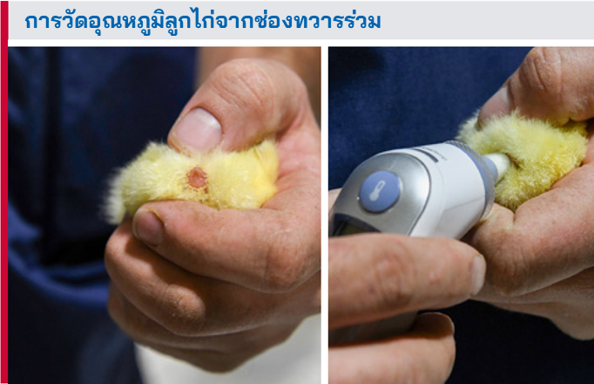
ลูกไก่แรกเกิดยังไม่สามารถควบคุมอุณหภูมิร่างกายได้อย่างสมบูรณ์ โดยอุณหภูมิของพวกมันจะแปรผันตามสภาพอากาศโดยรอบ อย่างไรก็ตาม ลูกไก่สามารถผลิตความร้อนได้เล็กน้อย พวกมันจึงต้องปรับเปลี่ยนพฤติกรรมตามสภาพแวดล้อมรอบตัว ลูกไก่จะแสดงพฤติกรรมรวมกลุ่มเบียดกันเพื่อแบ่งปันความร้อนในร่างกายเมื่อรู้สึกหนาว ลูกไก่จะขยายระยะห่างระหว่างกันให้มากที่สุดและแสดงอาการหอบหากรู้สึกร้อน อุณหภูมิร่างกายที่เหมาะสมของลูกไก่ควรอยู่ระหว่าง 39.4-40.6 °C (103-105 °F) ซึ่งสามารถตรวจวัดได้ง่ายโดยใช้เครื่องวัดอุณหภูมิแตะบริเวณช่องทวารร่วม (เช่น Braun Thermoscan®) การตรวจสอบอุณหภูมิของลูกไก่ในระหว่างการพักคอย การขนส่ง (หากสามารถปฏิบัติได้) และเมื่อส่งมอบหน้าฟาร์ม จะช่วยให้ข้อมูลสะท้อนกลับเกี่ยวกับอุณหภูมิสิ่งแวดล้อมที่จำเป็นในการรักษาอุณหภูมิร่างกายของสัตว์ให้อยู่ในเกณฑ์ที่ต้องการ ตลอดจนความสม่ำเสมอของอุณหภูมิภายในจุดพักคอยหรือภายในตู้ขนส่ง
Poor temperature control can result in overheating and dehydration, or chilling, both of which can compromise chick quality. Typically, chilling has a greater impact on losses in the first 7 days than overheating; however, during transport, with chicks generating metabolic heat in boxes, this is less likely to occur. It is easy to overheat chicks when aiming to avoid chilling them.
The First Days: Where Performance Is Built
วันแรกของการเลี้ยง: รากฐานของการสร้างประสิทธิภาพการผลิต
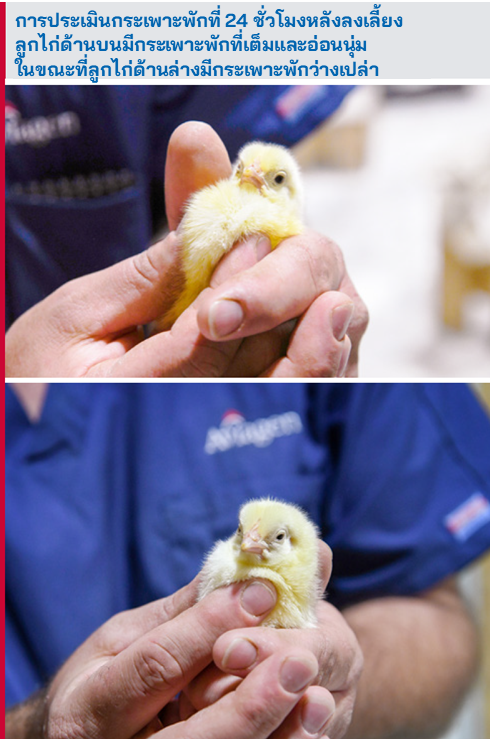
Once chicks arrive at the farm, the aim is to achieve strong early development and good uniformity. The house must be preheated to ensure that the floor and air temperatures are suitable for chicks before they arrive. Cool or wet floors will chill chicks when they are placed on them. Chicks should be able to find feed and water upon placement. Use chick paper, along with supplemental feeders and drinkers, to make this easier. Provide fresh, good-quality, crumbled feed on a “little and often” basis to encourage the chicks to eat. Ensure the water is cool, clean, and fresh to optimize drinking behavior. To better help the chicks find feed and water, run a high-intensity, long day (23 hours of light) for at least two days. Additional darkness can then be gradually added and light intensity reduced. Monitor the placement’s success by observing chick behavior. The chicks should be evenly spread across the brooding area, with about a third sleeping, about a third eating, and a third drinking. Monitor crop fill to determine the percentage of birds that are eating and drinking. This should be done at least 2 hours and at 24 hours post-placement, with a target of 95% crop fill at 24 hours.
เมื่อลูกไก่เดินทางมาถึงฟาร์ม เป้าหมายหลักคือการขับเคลื่อนให้เกิดพัฒนาการในระยะแรกเริ่มที่แข็งแกร่งและมีความสม่ำเสมอที่ดี โรงเรือนต้องได้รับการอุ่นกกล่วงหน้าเพื่อมั่นใจว่าอุณหภูมิพื้นและอุณหภูมิอากาศมีความเหมาะสมสำหรับลูกไก่ก่อนที่พวกมันจะมาถึง พื้นโรงเรือนที่เย็นหรือชื้นจะทำให้ลูกไก่เกิดภาวะหนาวสั่นทันทีที่ปล่อยเลี้ยง สัตว์ควรสามารถค้นหาอาหารและน้ำได้ทันทีเมื่อถูกปล่อยลงกก โดยควรใช้กระดาษรองพื้นสำหรับลูกไก่ ควบคู่ไปกับการติดตั้งถาดอาหารและหัวน้ำดื่มเสริมเพื่ออำนวยความสะดวก
จัดสรรอาหารชนิดเม็ดบี้ที่สดใหม่และมีคุณภาพดี โดยใช้หลักการ “ให้น้อยแต่บ่อยครั้ง” เพื่อกระตุ้นให้ลูกไก่กินอาหาร ดูแลให้น้ำไก่กินมีความเย็น สะอาด และสดใหม่เพื่อส่งเสริมพฤติกรรมการกินน้ำที่เหมาะสม และเพื่อช่วยให้ลูกไก่ค้นพบแหล่งอาหารและน้ำได้ดียิ่งขึ้น ควรใช้ระบบแสงสว่างที่มีความเข้มแสงสูงและมีระยะเวลาแสงวันยาว (แสงสว่าง 23 ชั่วโมงต่อวัน) เป็นเวลาอย่างน้อย 2 วันแรก หลังจากนั้นจึงค่อยๆ เพิ่มช่วงเวลามืดและลดความเข้มแสงลงตามลำดับ
ติดตามตรวจสอบความสำเร็จของการนำไก่เข้าเลี้ยงโดยการสังเกตพฤติกรรมของลูกไก่ ควรมีการกระจายตัวอย่างสม่ำเสมอทั่วบริเวณกก โดยสัดส่วนที่เหมาะสมคือ ประมาณ 1 ใน 3 กำลังนอนหลับ ประมาณ 1 ใน 3 กำลังกินอาหาร และประมาณ 1 ใน 3 กำลังกินน้ำ นอกจากนี้ ควรตรวจสอบความเต็มของกระเพาะพัก (Crop fill) เพื่อประเมินเปอร์เซ็นต์ของไก่ที่กินอาหารและน้ำ โดยควรดำเนินการที่เวลาอย่างน้อย 2 ชั่วโมง และที่ 24 ชั่วโมงหลังการปล่อยเลี้ยง โดยมีเป้าหมายคือค่าความเต็มของกระเพาะพักต้องอยู่ 95% เมื่อครบ 24 ชั่วโมง
The chicks’ comfort from hatch to post-placement sets the stage for the rest of the flock’s performance, regardless of whether they are broilers or breeders. Understanding whether the chicks are content throughout the supply chain requires communication and monitoring, especially of their behavior. Assess losses, uniformity, chick weight, chick temperature, crop fill, and 7-day weights to determine success.
ความสุขสบายของลูกไก่ตั้งแต่ฟักออกจนถึงระยะหลังการนำเข้าเลี้ยง ถือเป็นรากฐานสำคัญต่อประสิทธิภาพการผลิตส่วนที่เหลือของฝูงสัตว์ปีก ไม่ว่าจะเป็นไก่เนื้อหรือไก่พ่อแม่พันธุ์ การทำความเข้าใจความอยู่สบายของลูกไก่ตลอดห่วงโซ่อุปทานจำเป็นต้องอาศัยการสื่อสารและการตรวจสอบอย่างใกล้ชิดโดยเฉพาะพฤติกรรมของตัวสัตว์ ทั้งนี้ ควรประเมินจากอัตราการสูญเสีย ความสม่ำเสมอ น้ำหนักลูกไก่ อุณหภูมิร่างกาย ความเต็มของกระเพาะพัก และน้ำหนักตัวที่อายุ 7 วัน เพื่อเป็นดัชนีชี้วัดความสำเร็จในการจัดการ