Water: The Forgotten Nutrient น้ำ: สารอาหารที่ถูกมองข้าม
Water is essential for life. Not only is it a vital nutrient, but it is also involved in many physiological functions, such as digestion and absorption, thermoregulation, lubrication of joints and organs, and elimination of metabolic waste, and it is an essential part of blood and body tissues. About 70% of a bird’s weight is water, so any reduction in intake or loss of moisture will have a profound impact on overall performance. This is especially true for chicks arriving on the farm. Clean, cool, potable water must be available as soon as the birds are placed and remain available for the remainder of their time on the farm. Frequently, a change in water consumption is the earliest warning sign of a problem in the poultry house. It is strongly recommended that each house have its own independent water meter, and daily monitoring is undertaken.
น้ำเป็นสิ่งจำเป็นพื้นฐานต่อสิ่งมีชีวิต ไม่เพียงแต่เป็นสารอาหารที่สำคัญ แต่ยังเกี่ยวข้องกับกระบวนการทางสรีรวิทยามากมาย เช่น การย่อยและการดูดซึมอาหาร การควบคุมอุณหภูมิร่างกาย การหล่อลื่นข้อต่อและอวัยวะ การกำจัดของเสียจากกระบวนการเมตาบอลิซึม และยังเป็นส่วนประกอบหลักของเลือดและเนื้อเยื่อทั่วร่างกาย เนื่องจากประมาณ 70% ของน้ำหนักตัวสัตว์ปีกคือน้ำ ดังนั้นหากปริมาณการกินน้ำลดลงหรือร่างกายสูญเสียน้ำจะส่งผลกระทบอย่างรุนแรงต่อประสิทธิภาพการผลิตโดยรวม โดยเฉพาะอย่างยิ่งสำหรับลูกไก่ที่เพิ่งลงเลี้ยง น้ำที่สะอาด เย็น และดื่มได้ต้องพร้อมใช้งานทันทีที่ปล่อยลูกไก่ลงกกและต้องมีให้กินอย่างต่อเนื่องตลอดระยะเวลาการเลี้ยง บ่อยครั้งที่การเปลี่ยนแปลงของปริมาณการกินน้ำเป็นสัญญาณเตือนแรกสุดของปัญหาในโรงเรือน จึงแนะนำอย่างยิ่งให้ติดตั้งมิเตอร์น้ำแยกแต่ละโรงเรือนและต้องมีการติดตามผลรายวัน
Generally, water intake is approximately twice feed intake, though it can be much higher in hot conditions. As birds age and their feed intake increases, water consumption also increases. This increase in demand must be met by ensuring adequate drinker availability and by increasing the water flow rate as birds age. Water intake in males is higher than in females, mainly due to greater body size and associated metabolic demands.
ปริมาณการกินน้ำโดยทั่วไปจะอยู่ที่ประมาณ 2 เท่าของการกินอาหาร แต่อาจสูงกว่านั้นมากในสภาพอากาศร้อน เมื่อไก่อายุมากขึ้นและการกินอาหารเพิ่มขึ้น ปริมาณการกินน้ำก็จะเพิ่มขึ้นตามไปด้วย ความต้องการที่เพิ่มขึ้นนี้ต้องได้รับการตอบสนองด้วยการจัดเตรียมจำนวนอุปกรณ์ให้น้ำที่เพียงพอและการเพิ่มอัตราการไหลของน้ำตามอายุไก่ นอกจากนี้ ไก่เพศผู้จะมีปริมาณการกินน้ำสูงกว่าเพศเมีย เนื่องจากขนาดร่างกายที่ใหญ่กว่าและความต้องการในการใช้พลังงานที่สูงกว่า
A bird’s demand for water will increase by 6–7% per 1°C above an ambient temperature of 21°C. Not only will environmental temperature affect consumption, but water temperature will as well. Birds prefer cool water, and water intake will decline if the water gets too hot. If water temperatures routinely exceed 24°C, then consideration should be given to how the water is stored and whether it may need to be cooled.
อุณหภูมิสิ่งแวดล้อมมีผลโดยตรง โดยความต้องการน้ำของไก่จะเพิ่มขึ้น 6–7% ต่ออุณหภูมิทุก ๆ 1°C ที่สูงกว่า 21°C นอกจากอุณหภูมิรอบตัวแล้ว อุณหภูมิของน้ำเองก็มีผลเช่นกัน ไก่ชอบน้ำเย็นและปริมาณการกินจะลดลงหากน้ำร้อนเกินไป หากอุณหภูมิน้ำสูงเกิน 24°C เป็นประจำ ควรพิจารณาวิธีการจัดเก็บน้ำหรือการระบายความร้อนของน้ำ
Most modern poultry houses utilize nipple lines, which reduce labor, maintain water cleanliness, and minimize disease spread; however, these systems require effective maintenance. Lines must be set to the correct height and pressure for the bird’s age and size. They must also be routinely flushed, maintained, and cleaned.
โรงเรือนสมัยใหม่ส่วนใหญ่นิยมใช้ระบบหัวให้น้ำแบบนิปเปิ้ลซึ่งช่วยลดแรงงาน รักษาความสะอาดของน้ำ และลดการแพร่กระจายของโรค อย่างไรก็ตาม ระบบนี้ต้องการการบำรุงรักษาที่มีประสิทธิภาพ ต้องมีการตั้งความสูงและแรงดันน้ำให้เหมาะสมกับอายุและขนาดของไก่ รวมถึงต้องมีการไล่น้ำในระบบ (Flushing) และทำความสะอาดอย่างสม่ำเสมอ
The flow rate (or water pressure) in the lines must be set to ensure the water supply is sufficient to meet the maximum daily water intake. For young chicks, this will be relatively low and will increase as the birds age. Houses with higher pressures tend to encourage additional eating and drinking, resulting in higher initial growth, but are more prone to leaks, water wasteage by the birds, and poor-quality litter, which can cause welfare challenges. Low flow rates, on the other hand, especially when stocking density is high, and birds per nipple are constrained, can result in lower growth rates. As a rough guide, weeks of age x 7 + 20 ml/minute can be used as an initial estimate of flow requirements.
อัตราการไหล (หรือแรงดันน้ำ) ในระบบต้องตั้งค่าเพื่อให้มั่นใจว่าน้ำจะเพียงพอต่อความต้องการสูงสุดในแต่ละวัน แรงดันน้ำสำหรับลกไก่จะค่อนข้างต่ำและค่อย ๆ เพิ่มขึ้นตามอายุ การใช้แรงดันน้ำที่สูงเกินไปอาจกระตุ้นให้ไก่กินอาหารและน้ำมากขึ้น ส่งผลให้การเติบโตในช่วงแรกดีขึ้น แต่ก็เสี่ยงต่อการรั่วซึม น้ำหยด และปัญหาวัสดุรองพื้นเปียกแฉะซึ่งส่งผลต่อสวัสดิภาพสัตว์ ในทางกลับกัน แรงดันน้ำที่ต่ำเกินไป โดยเฉพาะในโรงเรือนที่มีความหนาแน่นสูงหรือมีจำนวนไก่ต่อหัวนิปเปิ้ลมากเกินไป อาจทำให้อัตราการเจริญเติบโตลดลง เกณฑ์การคำนวณแรงดันน้ำเบื้องต้น: อายุ (สัปดาห์) x 7 + 20 มล./นาที
For farms with bell drinkers, ensure they are emptied and cleaned daily to prevent the buildup of organic matter. As with the nipple lines, the height and pressure in these drinkers must be constantly checked.
สำหรับฟาร์มที่ใช้กระปุกน้ำ ต้องมั่นใจว่ามีการเปลี่ยนน้ำและทำความสะอาดทุกวันเพื่อป้องกันการสะสมของสารอินทรีย์ และต้องตรวจสอบความสูงและแรงดันอย่างต่อเนื่องเช่นเดียวกับระบบนิปเปิ้ล
Minerals excreted by the kidneys promote moisture loss. Excess levels of minerals or even protein, via deamination, in the diet can lead to high water excretion. Sodium, potassium, and chloride are all known to increase drinking and wet droppings. The amount of sodium in the water should be taken into account when formulating the diets to avoid excess sodium on the farm. Potassium is usually not an issue unless high levels of soy are used in the diet, especially in high-protein starter diets. Any chloride issues can typically be addressed by replacing a proportion of the salt in the diet with sodium bicarbonate.
แร่ธาตุที่ถูกขับออกผ่านไตจะส่งผลต่อการสูญเสียน้ำของร่างกาย หากในอาหารมีระดับแร่ธาตุหรือโปรตีนที่สูงเกินไป เมื่อผ่านกระบวนการ Deamination อาจนำไปสู่การขับน้ำทิ้งในปริมาณมาก โซเดียม โพแทสเซียม และคลอไรด์ ล้วนเป็นปัจจัยที่ทำให้ไก่กินน้ำมากขึ้นจนมูลไก่เหลว การคำนวณสูตรอาหารต้องนำปริมาณโซเดียมในน้ำมาพิจารณาด้วยเพื่อป้องกันโซเดียมเกิน ส่วนโพแทสเซียมมักไม่ใช่ปัญหา เว้นแต่จะมีการใช้กากถั่วเหลืองในระดับที่สูงมาก โดยเฉพาะในอาหารไก่เล็กที่มีโปรตีนสูง หากมีปัญหาเรื่องคลอไรด์ สามารถแก้ไขได้ด้วยการแทนที่เกลือในสูตรอาหารบางส่วนด้วยโซเดียมไบคาร์บอเนต
The quality of the water supplied to the farm should be routinely monitored, especially if the water supply is from a bore well, well, or dam, as water quality can change dramatically with the season.
คุณภาพของน้ำที่ใช้ภายในฟาร์มควรได้รับการตรวจสอบอย่างสม่ำเสมอ โดยเฉพาะหากแหล่งน้ำมาจากบ่อบาดาล บ่อน้ำ หรือเขื่อน เนื่องจากคุณภาพน้ำสามารถเปลี่ยนแปลงอย่างรวดเร็วตามฤดูกาล
Table 1 shows the water quality criteria for poultry.
ตารางที่ 1 แสดงเกณฑ์คุณภาพน้ำเพื่อบริโภคสำหรับสัตว์ปีก
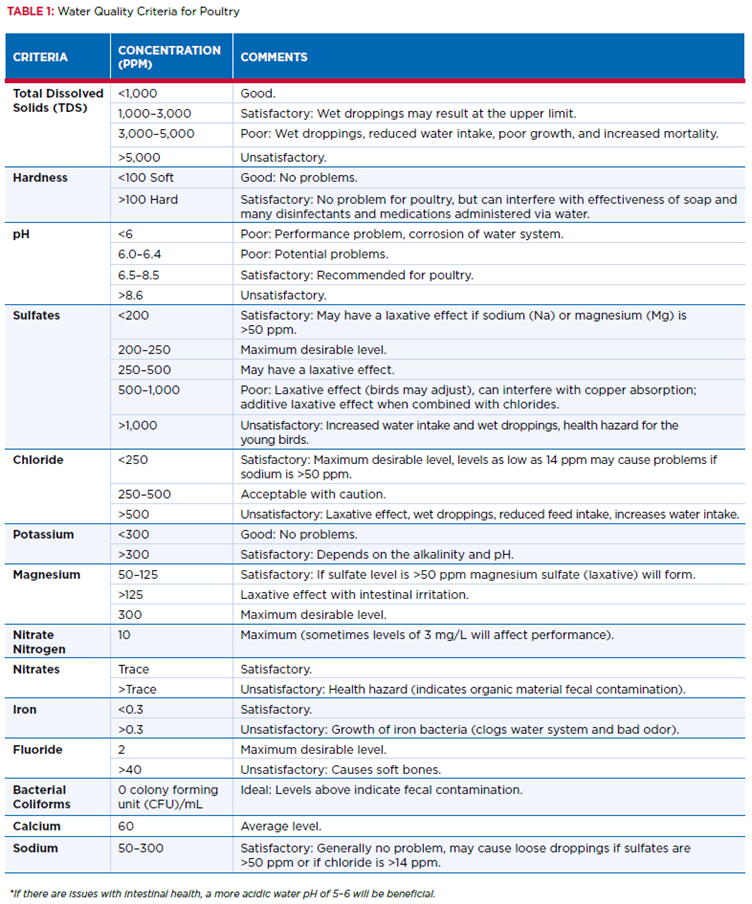
| เกณฑ์ | ความเข้มข้น (ppm) | คำอธิบาย |
| Total Dissolved Solids (TDS) | <1,000 | ดี |
| 1,000–3,000 | ตรงตามเกณฑ์มาตรฐาน: อาจทำให้มูลไก่เหลวหากค่าสูง | |
| 3,000–5,000 | ด้อยคุณภาพ: มูลไก่เหลว กินน้ำลดลง โตช้า และอัตราการตายสูงขึ้น | |
| >5,000 | ไม่ตรงตามเกณฑ์มาตรฐาน | |
| ความกระด้าง (Hardness) | <100 น้ำอ่อน | ดี |
| >100 น้ำกระด้าง | ตรงตามเกณฑ์มาตรฐาน: ไม่มีปัญหาต่อสัตว์ปีก แต่อาจขัดขวางการทำงานของสบู่ ยาฆ่าเชื้อ และยาที่ละลายให้ทางน้ำดื่ม | |
| ค่า pH | <6 | ด้อยคุณภาพ: มีปัญหาด้านประสิทธิภาพ กัดกร่อนระบบน้ำ |
| 6.0–6.4 | ด้อยคุณภาพ: มีแนวโน้มจะเกิดปัญหา | |
| 6.5–8.5 | ตรงตามเกณฑ์มาตรฐาน: เป็นระดับที่แนะนำสำหรับสัตว์ปีก | |
| >8.6 | ไม่ตรงตามเกณฑ์มาตรฐาน | |
| ซัลเฟต (Sulfates) | <200 | ตรงตามเกณฑ์มาตรฐาน: อาจมีฤทธิ์เป็นยาระบายหากโซเดียมหรือแมกนีเซียม >50 ppm |
| 200–250 | ค่าสูงสุดที่ยอมรับได้ | |
| 250–500 | อาจมีฤทธิ์เป็นยาระบาย | |
| 500–1,000 | ด้อยคุณภาพ: มีฤทธิ์เป็นยาระบาย (ไก่อาจปรับตัวได้) ขัดขวางการดูดซึมทองแดง เมื่อร่วมกับคลอไรด์จะเพิ่มฤทธิ์ยาระบาย | |
| >1,000 | ไม่ตรงตามเกณฑ์มาตรฐาน: ไก่กินน้ำเพิ่มขึ้นและถ่ายเหลว เป็นอันตรายต่อสุขภาพลูกไก่ | |
| คลอไรด์ (Chloride) | <250 | ตรงตามเกณฑ์มาตรฐาน: ค่าสูงสุดที่ยอมรับได้ เนื่องจากระดับคลอไรด์เพียง 14 ppm ก็อาจเกิดปัญหาหากโซเดียม >50 ppm |
| 250–500 | ยอมรับได้แต่ควรระมัดระวัง | |
| >500 | ไม่ตรงตามเกณฑ์มาตรฐาน: มีฤทธิ์เป็นยาระบาย มูลไก่เหลว กินอาหารลดลง กินน้ำเพิ่มขึ้น | |
| โพแทสเซียม (Potassium) | <300 | ดี |
| >300 | ตรงตามเกณฑ์มาตรฐาน: ขึ้นอยู่กับค่าความเป็นด่างและค่า pH | |
| แมกนีเซียม (Magnesium) | 50 – 125 | ตรงตามเกณฑ์มาตรฐาน: หากซัลเฟต >50 ppm จะเกิดแมกนีเซียมซัลเฟต (ยาระบาย) |
| >125 | มีฤทธิ์เป็นยาระบายและระคายเคืองลำไส้ | |
| 300 | ค่าสูงสุดที่ยอมรับได้ | |
| ไนเตรตไนโตรเจน (Nitrate Nitrogen) | 10 | ค่าสูงสุดที่ยอมรับได้ (บางครั้งระดับเพียง 3 mg/L ก็ส่งผลต่อประสิทธิภาพได้) |
| ไนเตรต (Nitrates) | ปริมาณเล็กน้อย | ตรงตามเกณฑ์มาตรฐาน |
| เกินกว่าปริมาณเล็กน้อย | ไม่ตรงตามเกณฑ์มาตรฐาน: อันตรายต่อสุขภาพ (บ่งชี้การปนเปื้อนของสิ่งปฏิกูล/อินทรียวัตถุ) | |
| เหล็ก (Iron) | <0.3 | ตรงตามเกณฑ์มาตรฐาน |
| >0.3 | ไม่ตรงตามเกณฑ์มาตรฐาน: การเติบโตของแบคทีเรียที่ใช้ธาตุเหล็ก (ระบบน้ำอุดตันและมีกลิ่นเหม็น) | |
| ฟลูออไรด์ (Fluoride) | 2 | ค่าสูงสุดที่ยอมรับได้ |
| >40 | ไม่ตรงตามเกณฑ์มาตรฐาน: ทำให้กระดูกอ่อน | |
| โคลิฟอร์มแบคทีเรีย | ไม่พบแบคทีเรีย 0 CFU/มล. | ค่าที่เหมาะสมที่สุด: หากสูงกว่านี้แสดงว่ามีการปนเปื้อนของสิ่งปฏิกูล |
| แคลเซียม (Calcium) | 60 | ระดับโดยเฉลี่ยทั่วไป |
| โซเดียม (Sodium) | 50–300 | ตรงตามเกณฑ์มาตรฐาน: โดยทั่วไปมักไม่เป็นปัญหา แต่อาจทำให้มูลไก่เหลวหากซัลเฟต >50 ppm หรือคลอไรด์ >14 ppm |
The cleanliness of the drinking system should be assessed during the flock. Make sure that the line is flushed before sampling to avoid excessive organic matter, and sample at the last nipple. A structured water sanitation, and line-cleaning program is needed to control both waterborne bacterial contamination and biofilm proliferation within the lines. While bacteria in the water can directly affect bird performance and reduce the effectiveness of vaccination or medication, biofilm formation provides a persistent reservoir for microbial growth and can reduce the flow rate. A chlorine program that delivers 3–5 ppm of free chlorine at the nipple, or UV sanitation, can help control bacterial contamination. Bacterial control is more challenging in operations using open drinking systems. These systems require more frequent cleaning, regular water replacement, and closer monitoring of water sanitation. Between flocks, all water pipes should be physically or chemically treated to remove biofilm and mineral buildup.
ควรประเมินความสะอาดของระบบให้น้ำระหว่างการเลี้ยง โดยต้องมั่นใจว่ามีการไล่น้ำทิ้งก่อนการเก็บตัวอย่างเพื่อหลีกเลี่ยงเศษสารอินทรีย์ และควรเก็บตัวอย่างที่หัวนิปเปิ้ลท้ายโรงเรือน การวางโปรแกรมสุขาภิบาลน้ำและการทำความสะอาดท่อน้ำอย่างเป็นระบบมีความจำเป็นเพื่อควบคุมทั้งการปนเปื้อนของแบคทีเรียในน้ำและการเพิ่มจำนวนของไบโอฟิล์มภายในท่อ เนื่องจากไบโอฟิล์มเป็นแหล่งสะสมของจุลินทรีย์ที่ทำให้เกิดโรคและอาจทำให้ระบบจ่ายน้ำอุดตัน
การใช้โปรแกรมคลอรีนที่มีระดับ Free Chlorine 3–5 ppm ที่ปลายหัวนิปเปิ้ล หรือการใช้รังสี UV สามารถช่วยควบคุมการปนเปื้อนได้ การควบคุมแบคทีเรียในระบบให้น้ำแบบเปิดจะทำได้ยากกว่า จึงต้องการการล้างทำความสะอาด การเปลี่ยนน้ำ และการเฝ้าระวังที่เข้มงวดมากขึ้น ทั้งนี้ ในช่วงพักโรงเรือน ท่อน้ำทั้งหมดควรได้รับการบำบัดด้วยวิธีทางกายภาพหรือทางเคมีเพื่อกำจัดไบโอฟิล์มและการสะสมของแร่ธาตุ
A clean water supply should be available to the chicks as soon as they are placed on the farm. Any restriction on water intake can reduce flock performance. Many factors can influence water intake, including bird age and sex, house and water temperatures, and drinker type. It is critical that the microbial load and physical quality of the water are monitored and corrective action is taken where needed to ensure optimal bird performance.
แหล่งน้ำที่สะอาดต้องพร้อมสำหรับลูกไก่ทันทีที่ลงฟาร์ม เนื่องจากการจำกัดการกินน้ำจะลดประสิทธิภาพของฝูงลงอย่างชัดเจน ผู้เลี้ยงต้องให้ความสำคัญกับการตรวจสอบปริมาณจุลินทรีย์และคุณภาพทางกายภาพของน้ำ เพื่อแก้ไขปัญหาได้ทันท่วงทีและรับประกันประสิทธิภาพการผลิตที่ดีที่สุดFor more information, visit the Info Center at www.aviagen.com or scan the QR code.
ท่านสามารถค้นหาข้อมูลเพิ่มเติมได้ที่ Info Center เว็บไซต์ www.aviagen.com หรือสแกนรหัส QR